
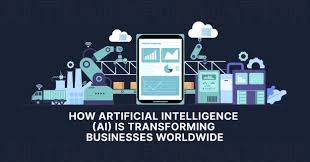
Artificial Intelligence (AI) is rapidly reshaping how modern businesses operate, compete, and grow. From automating repetitive tasks to delivering powerful data-driven insights, Artificial Intelligence in business has become one of the most important drivers of digital transformation. Companies across industries are investing heavily in AI-powered solutions to improve efficiency, enhance customer experiences, and gain a competitive advantage in the digital economy.
As organizations continue to adopt advanced technologies, AI for business automation, machine learning, and intelligent analytics are helping companies streamline operations and make smarter decisions. Businesses that embrace AI are able to innovate faster, reduce operational costs, and deliver personalized services that meet evolving customer expectations.
Understanding Artificial Intelligence in Business
Artificial Intelligence refers to the ability of machines and software systems to simulate human intelligence processes such as learning, reasoning, and decision-making. In a business context, AI technologies analyze large volumes of data, identify patterns, and generate insights that help organizations optimize their strategies.
Modern businesses rely on AI-powered business solutions to handle complex processes that once required significant human effort. Through technologies like machine learning, natural language processing, and predictive analytics, companies can automate workflows and make informed decisions in real time.
The increasing demand for AI software development and intelligent automation solutions shows how critical this technology has become for companies looking to stay competitive in a fast-evolving digital landscape.
AI-Driven Automation Improving Business Efficiency
One of the most significant ways AI is transforming businesses is through automation. Companies are using AI-powered automation tools to eliminate repetitive tasks and streamline workflows. This allows employees to focus on higher-value work such as strategic planning, innovation, and customer engagement.
AI-driven automation is commonly used in areas such as data processing, inventory management, financial analysis, and customer support. By implementing AI business automation solutions, organizations can reduce operational costs while increasing accuracy and productivity.
Automation powered by artificial intelligence also improves scalability. As businesses grow, AI systems can handle increased workloads without requiring large expansions in human resources, making them highly valuable for startups and enterprises alike.
Enhancing Customer Experience with AI
Customer expectations are evolving rapidly, and businesses must deliver personalized experiences to remain competitive. Artificial Intelligence enables companies to understand customer behavior, preferences, and purchasing patterns through advanced data analysis.
AI-powered tools such as chatbots, recommendation engines, and predictive analytics allow businesses to interact with customers more effectively. For example, AI chatbots for customer support can provide instant responses to inquiries, improving response time and customer satisfaction.
In addition, AI-driven personalization helps companies recommend products, services, or content tailored to individual users. This level of customization improves engagement and strengthens brand loyalty, making AI-powered customer experience solutions a key investment for modern businesses.
Data-Driven Decision Making with AI Analytics
Businesses today generate massive amounts of data, but turning that data into actionable insights can be challenging. Artificial Intelligence helps organizations analyze complex datasets quickly and accurately, enabling smarter decision-making.
Through AI-powered data analytics, companies can identify market trends, predict customer behavior, and optimize business strategies. Predictive analytics tools help businesses anticipate demand, improve inventory management, and reduce risks associated with uncertain market conditions.
For organizations focused on digital transformation, implementing AI analytics solutions for business intelligence allows leadership teams to make faster and more informed decisions based on real-time insights.
AI Transforming Marketing and Sales Strategies
Artificial Intelligence is also revolutionizing how businesses approach marketing and sales. AI-driven tools allow companies to analyze customer behavior, optimize marketing campaigns, and target the right audience with precision.
Through machine learning algorithms, businesses can track customer interactions across digital platforms and identify patterns that reveal purchasing intent. This allows marketers to create highly targeted campaigns that improve conversion rates.
AI also supports automated lead generation, personalized email marketing, and predictive sales forecasting. By leveraging AI-powered marketing automation tools, businesses can improve campaign performance while reducing manual effort.
AI in Software Development and Product Innovation
Artificial Intelligence is playing a major role in accelerating innovation within the technology industry. Software development companies are integrating AI capabilities into applications, platforms, and digital products to deliver smarter solutions.
AI tools assist developers by automating code generation, testing software, and identifying potential bugs. This speeds up the software development lifecycle and improves product quality. Businesses that adopt AI-driven software development solutions can launch products faster and respond quickly to market demands.
In addition, AI is enabling the creation of intelligent applications such as recommendation systems, predictive analytics platforms, and smart automation tools that provide greater value to users.
Strengthening Business Security with AI
Cybersecurity has become a critical concern for businesses as digital threats continue to evolve. Artificial Intelligence plays an important role in protecting business systems and sensitive data from cyber attacks.
AI-powered security systems can monitor network activity, detect unusual behavior, and respond to potential threats in real time. Unlike traditional security tools, AI systems continuously learn from new data and improve their ability to identify vulnerabilities.
By implementing AI-driven cybersecurity solutions, organizations can strengthen their defenses against cyber threats while ensuring the safety of their digital infrastructure.
The Future of Artificial Intelligence in Business
The role of Artificial Intelligence in business will continue to expand as technology evolves. In the coming years, companies are expected to adopt more advanced AI capabilities such as intelligent automation, autonomous decision-making systems, and advanced predictive analytics.
Industries including healthcare, finance, retail, logistics, and manufacturing are already leveraging AI to transform their operations. Businesses that invest in AI technology solutions today are positioning themselves for long-term growth and innovation.
As the demand for AI-powered systems increases, organizations will need experienced technology partners to design and implement customized solutions that align with their business goals.
Conclusion
Artificial Intelligence is no longer a futuristic concept—it is a powerful technology that is actively transforming businesses around the world. From automating operations and enhancing customer experiences to improving decision-making and cybersecurity, AI is enabling companies to operate more efficiently and innovate at scale.
Businesses that embrace AI-driven digital transformation gain a competitive advantage by leveraging intelligent systems that improve productivity, reduce costs, and deliver superior customer experiences. As AI continues to evolve, organizations that integrate this technology into their operations will be better prepared to succeed in the rapidly changing digital landscape.
For companies looking to stay ahead in the modern business environment, investing in AI-powered software development and business solutions is becoming an essential step toward sustainable growth and long-term success.